

Sourdough Tagliatelle
This homemade sourdough tagliatelle is rich, silky, and full of rustic flavor. Made with fresh eggs and sourdough discard, the dough develops a delicate chew and subtle tang that elevates any pasta dish. Rolling and cutting the pasta by hand creates tender ribbons that cook quickly and beautifully absorb sauces. Whether tossed with butter and parmesan or paired with a hearty ragù, this tagliatelle delivers comforting, restaurant-quality pasta straight from your kitchen.
Fun Facts:
Tagliatelle means “little cuts” in Italian, referring to the long ribbons traditionally cut by hand.
Egg-rich pasta is typical of Northern Italy, especially Emilia-Romagna, where tagliatelle is a staple.
Sourdough discard adds natural fermentation, giving the pasta a subtle tang and improving texture without tasting sour.
Fresh pasta cooks in minutes, making it faster than most dried pasta dishes.
Tagliatelle is wider than fettuccine, which helps it hold creamy and meat-based sauces better.
Homemade pasta dough changes with humidity, so traditional Italian cooks adjust flour by feel, not strict measurements.
Why We Love This Recipe:
Rich, homemade flavor – Fresh eggs and sourdough discard create a deep, savory taste you just can’t get from store-bought pasta. Perfect texture – The dough rolls beautifully and cooks into tender, silky ribbons with just the right bite. Great use for sourdough discard – It’s a delicious way to reduce waste while adding extra flavor and digestibility. Versatile and comforting – This tagliatelle pairs well with everything from simple butter and cheese to hearty sauces. Simple, real ingredients – Just flour, eggs, salt, and sourdough—no preservatives, no fillers. Feels special but approachable – It’s impressive enough for guests, yet easy enough to make at home.
Recipe Ingredients:
Flour
Flour forms the structure of the pasta. All-purpose flour works beautifully, creating tender yet sturdy noodles. The gluten developed during kneading gives the tagliatelle its elasticity and signature bite. If desired, part of the flour can be substituted with “00” flour for an even silkier texture.
Eggs
Eggs provide richness, color, and structure. The yolks add fat for a smooth, supple dough and give the pasta its beautiful golden hue, while the whites contribute protein that strengthens the dough. Egg-based pasta is traditional in Northern Italian styles of fresh pasta.
Sourdough Discard
Sourdough discard adds subtle depth of flavor and a mild tang. The natural fermentation helps improve texture and may enhance digestibility. Whether active or unfed, discard works well in this recipe and reduces food waste in a delicious way.
Salt
Salt enhances flavor and balances the richness of the eggs. While the pasta also cooks in salted water, seasoning the dough itself ensures a well-rounded taste throughout each bite.
Storage & Reheating
Refrigerator (Fresh, Uncooked Pasta)
Place lightly floured pasta nests in an airtight container and refrigerate for up to 24 hours. For best texture, cook within the same day.
Freezer (Uncooked Pasta)
Arrange the pasta nests on a baking sheet and freeze until firm. Transfer to freezer-safe bags or airtight containers. Store for up to 2 months. Cook directly from frozen—do not thaw—adding an extra 30–60 seconds to the cooking time.
Freezer (Cooked Pasta)
Allow the cooked noodles to cool completely. Portion into airtight containers or freezer-safe bags and freeze for up to 2 months.
Reheating Cooked Pasta
From Frozen: Reheat directly in simmering water for 1–2 minutes, or warm in a skillet with sauce over medium heat until heated through.
From Refrigerated: Toss in a hot skillet with a splash of water, broth, or sauce to restore moisture.
For best results, reheated pasta should be combined with sauce immediately to maintain its silky texture and prevent drying.
FAQ
Why is my pasta dough too sticky?
Sticky dough usually means there is slightly too much moisture, which can happen due to egg size or humidity. Add flour a tablespoon at a time while kneading until the dough becomes smooth and elastic but not dry.
Why is my pasta dough too dry or crumbly?
If the dough won’t come together, it may need a small amount of moisture. Add a few drops of water or an extra teaspoon of sourdough discard and knead until smooth.
Can I use active sourdough starter instead of discard?
Yes. Both active starter and unfed discard work well. Active starter may produce a slightly lighter texture, while discard provides a more subtle tang.
Can I make this dough without eggs?
This specific recipe relies on eggs for structure and richness. For egg-free pasta, the ratios would need to be adjusted significantly.
Do I need a pasta machine?
No. A pasta machine makes rolling easier and more uniform, but you can achieve excellent results with a rolling pin. Just roll the dough as thin and even as possible.
How thin should I roll tagliatelle?
Aim for about 1–2 mm thick—thin enough to see your hand faintly through the sheet, but not so thin that it tears easily.
Can I dry this pasta instead of freezing it?
Yes. Hang the pasta or lay it flat in a single layer and allow it to air-dry until completely firm. Store in an airtight container for up to 1–2 weeks for best quality.
Can I make pasta without sourdough?
Yes, you can absolutely make tagliatelle without sourdough starter. Traditional Italian tagliatelle actually does not use sourdough at all. It’s usually made with just flour and eggs.
Nutrition Information
Estimated per serving
Calories: ~430–460 kcal
Carbohydrates: ~65 g
Protein: ~18 g
Fat: ~12 g
Saturated Fat: ~3–4 g
Cholesterol: ~155 mg
Sodium: ~420 mg
Fiber: ~2 g
Sugar: ~1 g
Nutritional values are estimates and may vary depending on flour type, egg size, and exact portion size. This calculation reflects the pasta only and does not include sauce or additional toppings.
How to make Sourdough Tagliatelle:
Step 1: Make the dough. On a clean work surface, mound the flour and make a wide well in the center. Add the eggs, sourdough discard, and salt into the well. Using a fork, gently beat the eggs and sourdough, slowly incorporating flour from the edges. You can also use an Electric Stand Mixer.


Step 2: Once a shaggy dough forms, use your hands to knead for about 8–10 minutes, until smooth, elastic, and slightly tacky. If the dough feels too dry, add a few drops of water. If too sticky, dust lightly with flour. (This dough needs to be on a harder side, not to sticky).
Step 3: Shape into a ball, wrap tightly, and let rest at room temperature for 30–60 minutes. For more sourdough flavor and better digestibility, you can refrigerate the dough overnight (8–12 hours or even up to 24 hours).


Step 4: Divide dough into approximately 15 pieces. Covering them nice with flour so they don't stick to each other or to the surface. Keep unused pieces covered.
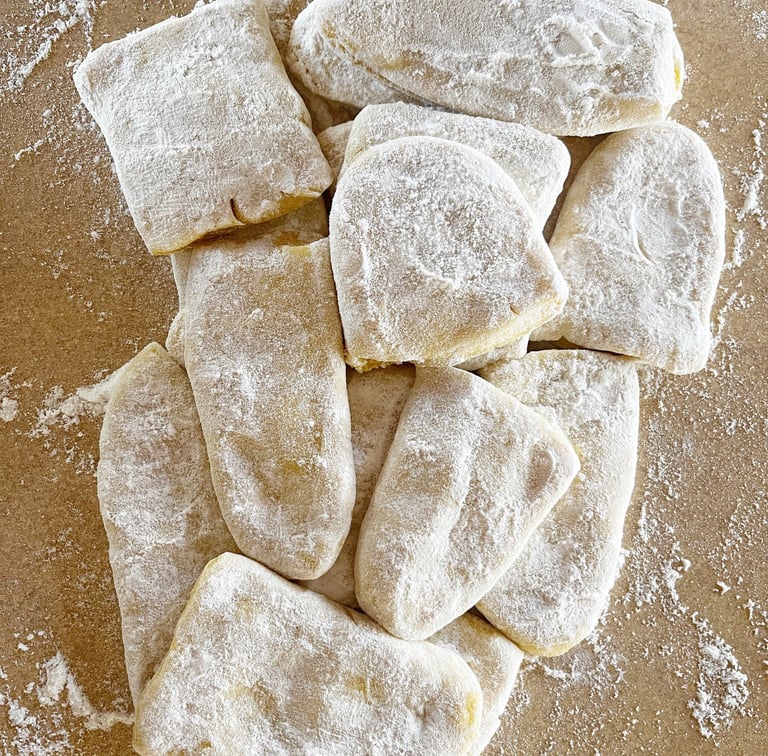
Step 5: Roll each piece very thin using a rolling pin or pasta machine (to about 1–2 mm thick). Lightly flour the sheets.
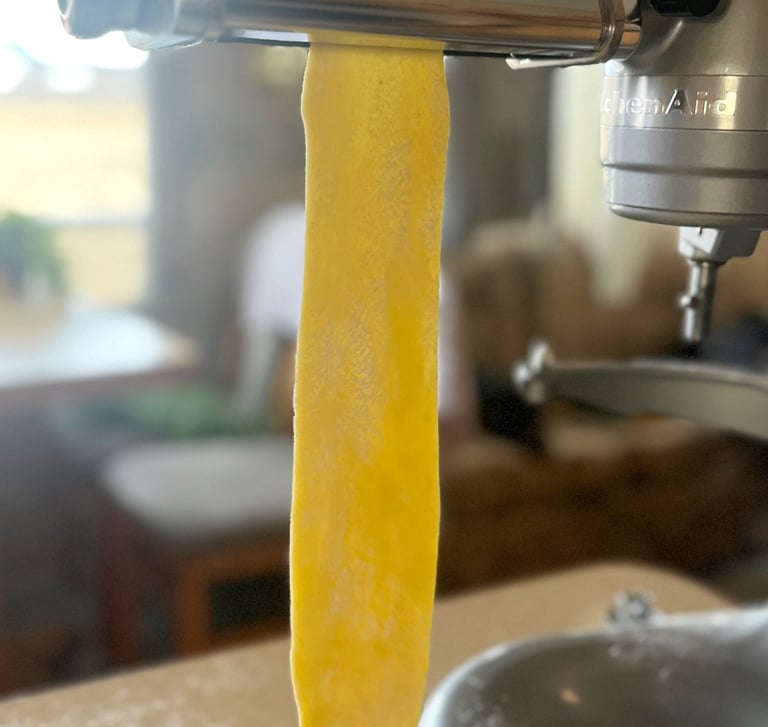
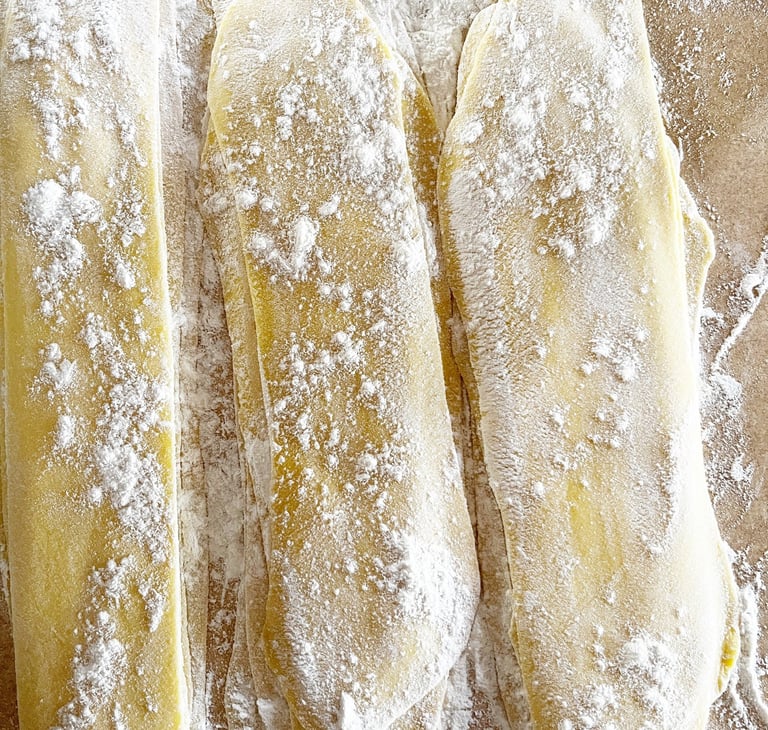
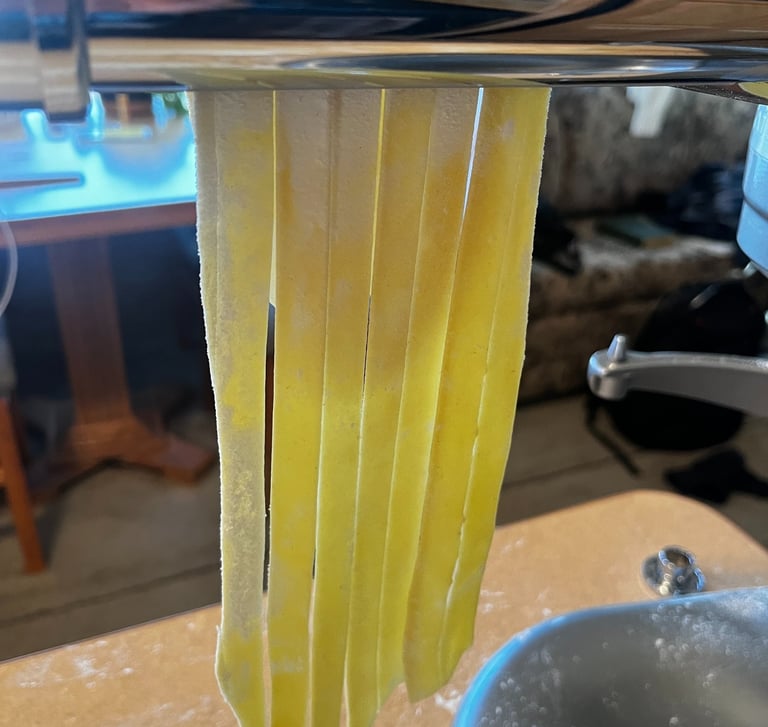
Step 6: Fold sheets loosely, and cut into ¼-inch (6–7 mm) wide strips (or use a Tagliatelle machine) Toss gently with flour and form nests.
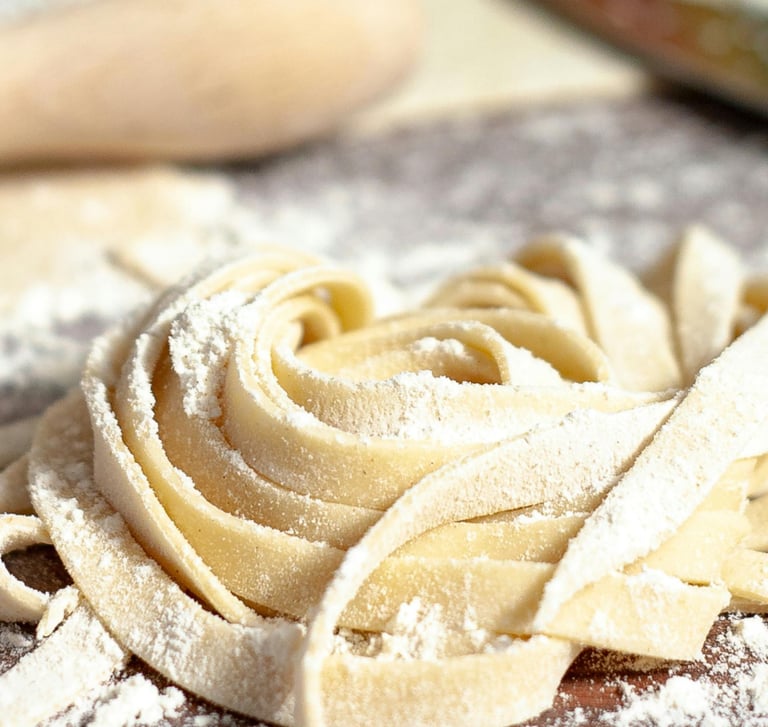
Step 7: Bring a large pot of well-salted water to a boil. Add the tagliatelle and gently stir. Cook for 4-5 minutes, until tender but al dente. Drain and rinse briefly with hot water to get rid of excess flour, then serve immediately with your favorite sauce.
Serving Ideas:
Toss with butter, garlic, and parmesan
Serve with creamy mushroom sauce
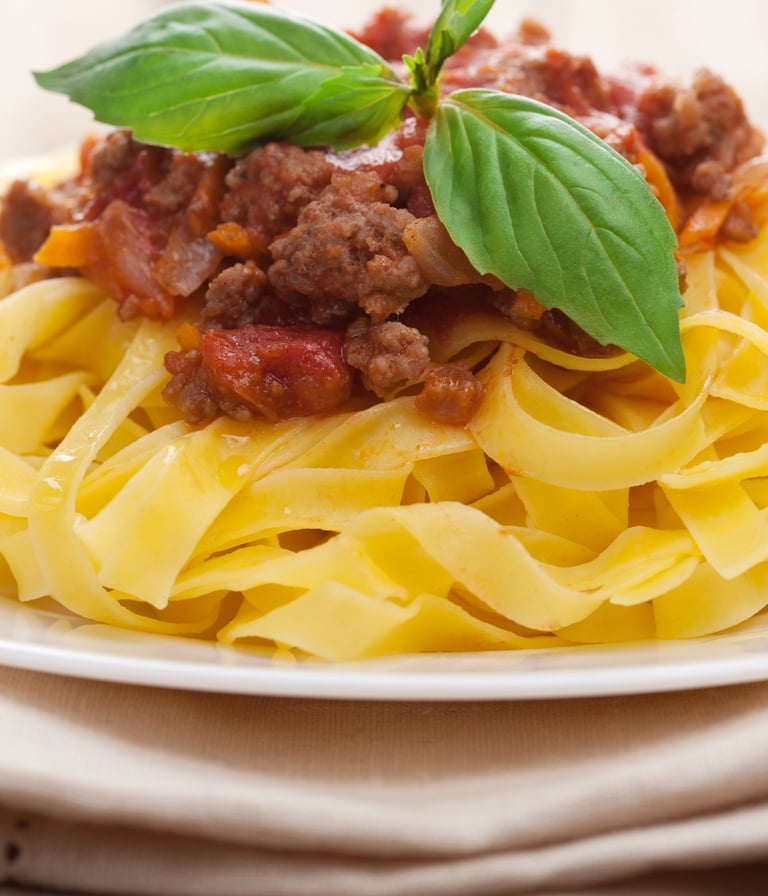
Pair with a slow-simmered tomato or ragù sauce
Tip:
After cooking, the noodles may be frozen for later use. Allow them to cool completely, then portion as desired and store in airtight containers or freezer-safe bags. Properly stored, the cooked noodles maintain their quality and texture in the freezer and can be reheated directly in hot water from frozen when needed.
This versatile dough can be used to make a variety of fresh pasta shapes. In addition to tagliatelle, it works beautifully for fettuccine, pappardelle, linguine, lasagna sheets, and even stuffed pastas such as ravioli or tortellini. Simply adjust the thickness and width of the cut to create the desired noodle style.
SOURDOUGH TAGLIATELLE

Homemade
Prep Time: 30 minutes
Rest Time: 30–60 minutes
Cook Time: 5 minutes
Total Time: About 1 hour 5 minutes (with a 30-minute rest). Up to 1 hour 35 minutes (with a 60-minute rest)
Ingredients:
3 ½ cups all-purpose flour (plus extra for dusting)
5 large eggs
½ cup sourdough discard (unfed or active both work)
1 teaspoon salt
Instructions:
On a clean work surface, mound the flour and make a wide well in the center. Add the eggs, sourdough discard, and salt into the well. Using a fork, gently beat the eggs and sourdough, slowly incorporating flour from the edges. You can also use an Electric Stand Mixer.
Once a shaggy dough forms, use your hands to knead for about 8–10 minutes, until smooth, elastic, and slightly tacky. If the dough feels too dry, add a few drops of water. If too sticky, dust lightly with flour. (This dough needs to be on a harder side, not to sticky)
Shape into a ball, wrap tightly, and let rest at room temperature for 30–60 minutes. For more sourdough flavor and better digestibility, you can refrigerate the dough overnight (8–12 hours or even up to 24 hours).
Divide dough into approximately 15 pieces. Keep unused pieces covered. Use extra flour to avoid stickiness.
Roll each piece very thin using a rolling pin or pasta machine (to about 1–2 mm thick). Lightly flour the sheets.
Fold sheets loosely, and cut into ¼-inch (6–7 mm) wide strips (or use a Tagliatelle machine) Toss gently with flour and form nests.
Bring a large pot of well-salted water to a boil. Add the tagliatelle and gently stir. Cook for 4-5 minutes, until tender but al dente. Drain and rinse briefly with hot water to get rid of excess flour, then serve immediately with your favorite sauce.


You might also like